








Korean BBQ at Home: From Prep and Table Setup to Lettuce Wraps
What makes Korean BBQ so memorable is that first bite: the aroma of meat straight off the grill, the tang and heat of kimchi, a little savoury dipping sauce, all tucked into a crisp lettuce leaf. Around the table, one batch is grilled and passed around before the next goes on, and dinner settles into the easy rhythm of conversation.
You do not need a professional kitchen to put together a meal like this at home. Start with a good mix of meat, side dishes, dipping sauces and leafy greens for wraps, then work out where the grill, plates and ingredients will go. A couple of meat choices are plenty, and the side dishes do not all need to be homemade. With varied flavours and everything within easy reach, an ordinary dining table can host a satisfying Korean BBQ evening.
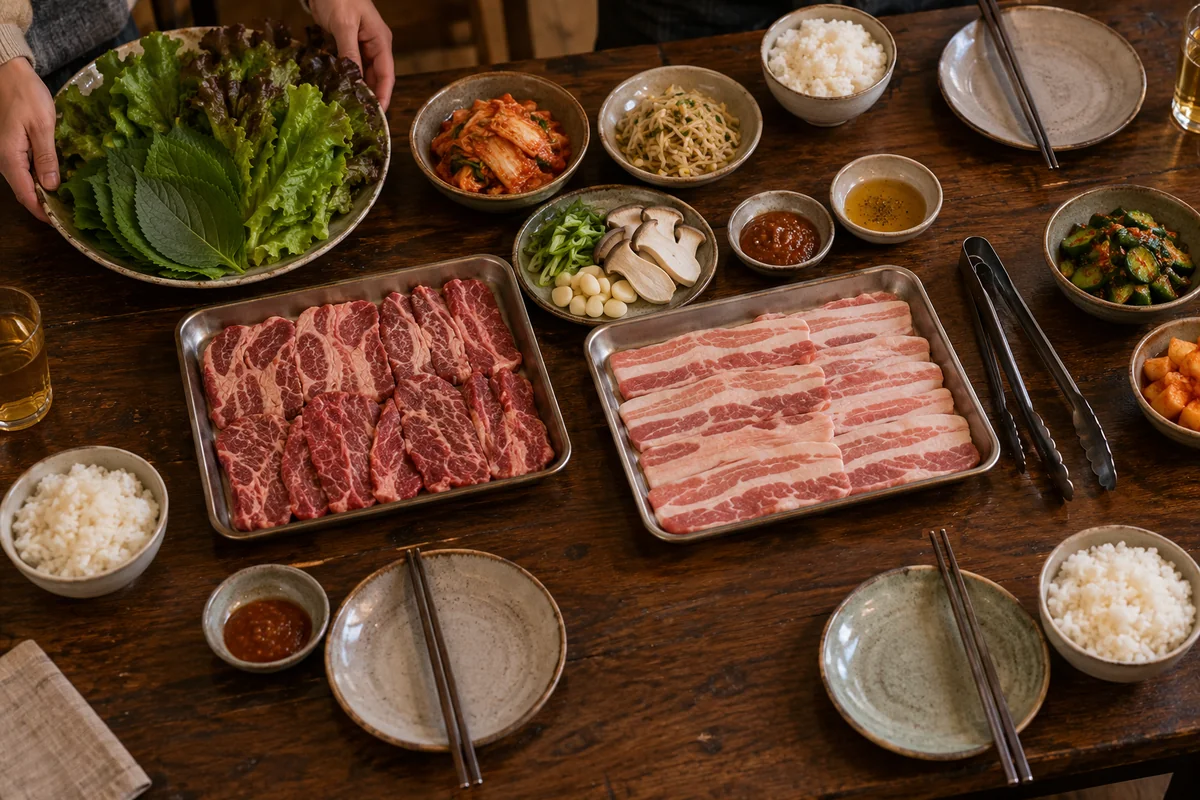
1. Build a balanced spread, with more than meat on the menu
For your first gathering, one thinly sliced beef option, one pork option and two or three side dishes are enough. Beef brings a deep, savoury flavour, while pork adds richness. Crisp greens, tangy kimchi and a little rice break up that richness and give each bite something different.
| Ingredient group | What to choose | How to prepare it | How to serve it |
|---|---|---|---|
| Beef | Thinly sliced beef or flanken-cut short ribs | Prepare plain or marinated meat according to your recipe; keep bone-in short ribs separate from thin slices | Bring out small batches and keep the rest refrigerated |
| Pork | Pork belly, with pork collar as another option | Cut into slices of similar thickness for more even cooking; keep plain and marinated meat separate | Use a dedicated raw-meat tray, separate from cooked-food plates |
| Greens for wraps | Lettuce and perilla leaves | Wash, drain thoroughly and choose leaves that work well for a bite-sized wrap | Place within everyone’s reach and replenish as needed |
| Side dishes and vegetables | Kimchi, seasoned bean sprouts, scallion salad and pickled radish slices; mushrooms and sliced garlic for grilling | Make the side dishes ahead or buy them ready-made, and divide among small bowls; set aside garlic and vegetables that still need grilling | Spread small bowls around the table instead of filling the centre with one large platter |
| Dipping sauces | Ssamjang and sesame oil with salt | Prepare ahead, with spicy and mild choices if needed | Give each person a small dish for dipping after serving themselves |
| Rice or noodles | Small bowls of rice, or chilled noodles to finish | Prepare enough for your guests; there is no need to make both | Serve a little rice at the start, saving chilled noodles for later |
A starting point for four people: prepare about 1 kg of boneless meat, such as 500 g of beef and 500 g of pork, with two heads of lettuce, a bunch of perilla leaves, two or three side dishes and four small bowls of rice. Add more meat for bigger appetites, and remember to allow for the weight of the bones if you choose bone-in short ribs. Treat this as a starting point and adjust to your guests’ appetites and the amount of other food you are serving.
2. Mix plain and marinated meat, and have the sauces ready
Keep some meat plain to enjoy its own flavour
Pork belly, pork collar and some cuts of beef work well without a marinade, with salt or ssamjang added after grilling. This lets the meat’s own flavour come through and gives guests who prefer to skip sweet or spicy marinades a choice.
For Korean-style marinated beef, onion, pear, garlic, ginger, soy sauce, a little sugar and sesame oil create a sweet and savoury base. Marinate the meat in the refrigerator ahead of time. Thinly sliced beef and flanken-cut short ribs differ in thickness and whether they contain bones, so prepare and grill them separately. Drain off excess marinade before the meat goes on the grill, so it can make contact with the cooking surface and brown rather than simmer in its juices.
A bowl of ssamjang and a dish of sesame oil with salt
Ssamjang brings a lettuce wrap together. Start with Korean soybean paste and chilli paste, then stir in minced garlic, sesame oil and toasted sesame seeds, adjusting the sweetness and heat to taste. If time is short, ready-made ssamjang divided into small dishes is just as convenient.
For sesame oil with salt, start with 2 teaspoons of sesame oil, a pinch of salt and a little black pepper. It pairs especially well with plain grilled meat; a light dip is enough. With kimchi and ssamjang already on the table, keep the salt on the lighter side.
Food safety and preparation: before grilling, have the prepared ingredients, sauces and clean cooked-food plates ready. Use separate tongs for raw and cooked meat, and do not put cooked meat back on a raw-meat tray. Keep spare raw meat in the refrigerator and bring it out in batches.
3. Give the table separate places for grilling, serving and refilling
Place the electric grill on a stable surface suitable for the appliance, leaving the clearance specified in its manual before arranging the rest of the table. Route the power cord where it will not get in the way, and keep room around the controller so sauce bowls and ingredient trays do not crowd it.
The grilling area
Keep the raw-meat tray, dedicated tongs and kitchen scissors here. One family member or friend can handle the first batch, with others taking a turn once everyone has settled into the rhythm.
The serving area
Place clean cooked-food plates, lettuce, perilla leaves and individual sauce dishes here. Move cooked meat to this area so guests do not have to keep reaching across the raw-meat tray.
The refill area
Use a nearby counter or a spot beside the table for extra side dishes and spare utensils, while keeping raw meat in the refrigerator. At a smaller table, serve a little of each item first and top it up as needed; the extra space makes the meal more relaxed.
Spread the side dishes among small bowls, and put greens at both ends of the table so they are easier to reach. Give everyone their own chopsticks, plate and sauce dish, and keep shared cooking tools separate from personal eating utensils.
4. Grill small batches so every round is fresh
Preheat, lay the meat flat and leave room to turn it
Preheat the grill according to its instructions before adding the first batch. Lay the slices flat without overlapping, and leave part of the cooking surface clear for turning and serving. Finish one batch before adding the next. That is easier to manage than continually adding raw meat, and each round reaches the table freshly cooked.
Start with plain meat, then move to marinated cuts
Grill plain meat first, followed by meat in sweeter marinades. Sugary sauces darken and scorch more readily on a hot surface, so watch marinated meat closely and reduce the heat if needed. Judge each type and thickness of meat separately; a food thermometer can confirm that the centre has reached a safe temperature. Do not assume one batch’s cooking time will work for every ingredient.
Keep an eye on rendered fat and smoke
Pork belly releases plenty of fat. If it pools on the cooking surface, you can gently dab it up with kitchen paper held in tongs, or handle it as directed in the appliance’s manual, so the meat does not end up frying in a pool of oil. At many Korean BBQ tables, kimchi and sliced onions are cooked along the edge of the grill, taking on flavour from the pork fat and becoming another side dish to enjoy with rice.
Indoor grilling produces smoke, so open a window or switch on the extractor before you start. If the smoke increases noticeably, reduce the amount of food on the grill and lower the heat. Pause if necessary, and follow the manual’s instructions for safely cleaning residue, including unplugging the appliance and letting it cool when required.
Move cooked meat off the grill, and refill at your guests’ pace
Use the cooked-food tongs to transfer finished meat to a clean plate and enjoy it in wraps while it is hot. Add the next batch of raw meat with a different pair of tongs. Grill mushrooms, garlic and other vegetables in batches too, and avoid leaving cooked food on a surface that is still heating while it waits to be eaten.
5. Put together a bite-sized lettuce wrap
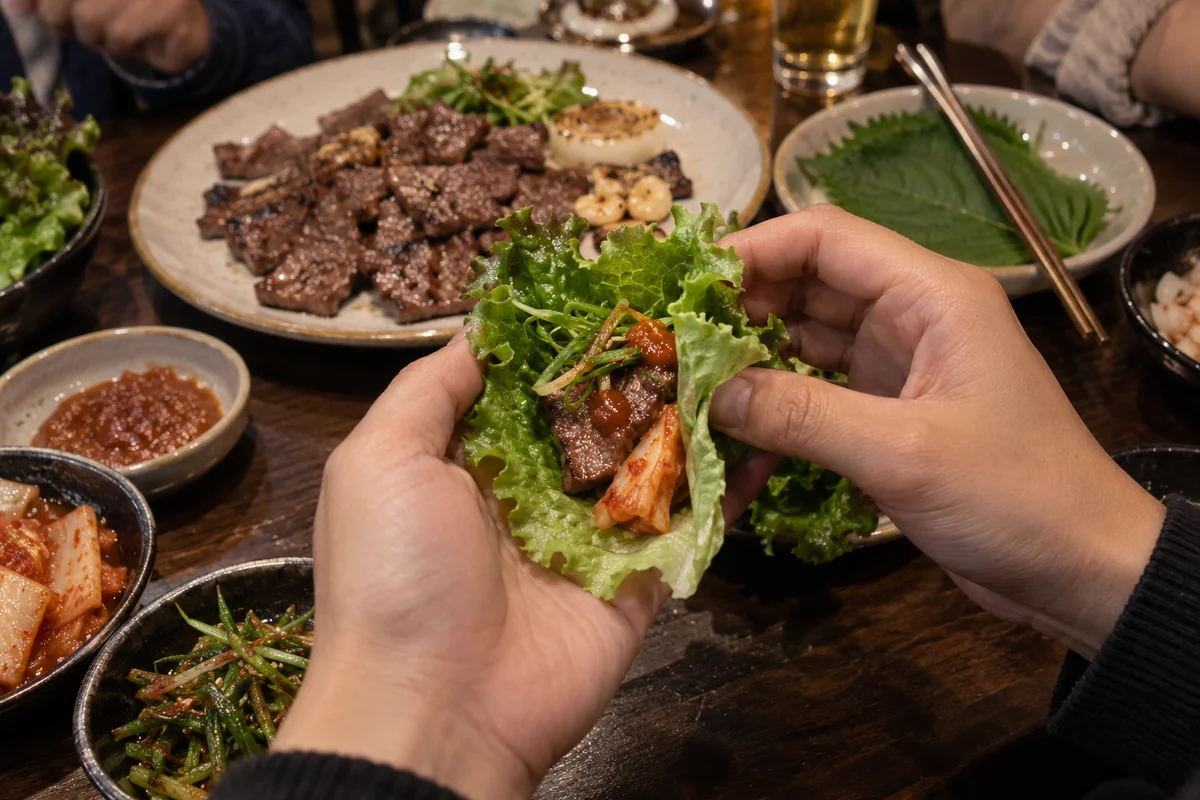
One of the classic ways to enjoy Korean BBQ is ssam: a fresh leaf holding meat, sauce and a little side dish, bringing their different textures together in one bite.
- Take a washed, well-drained lettuce leaf, adding a perilla leaf if you enjoy its herbal aroma.
- Add a small piece of freshly grilled meat. Cut larger cooked pieces into manageable bites with clean kitchen scissors first.
- Add a little ssamjang, then choose one or two extras such as scallions, kimchi, pickled radish or garlic; there is no need to pack in everything.
- Gently fold the leaf into a bite-sized wrap. Add a little rice to your own wrap if you like.
Well-browned meat, crisp leaves and a light touch with the sauce let you taste the savoury meat, tangy sides and fresh greens together. A small serving of chilled noodles later in the evening gives the meal a refreshing finish.
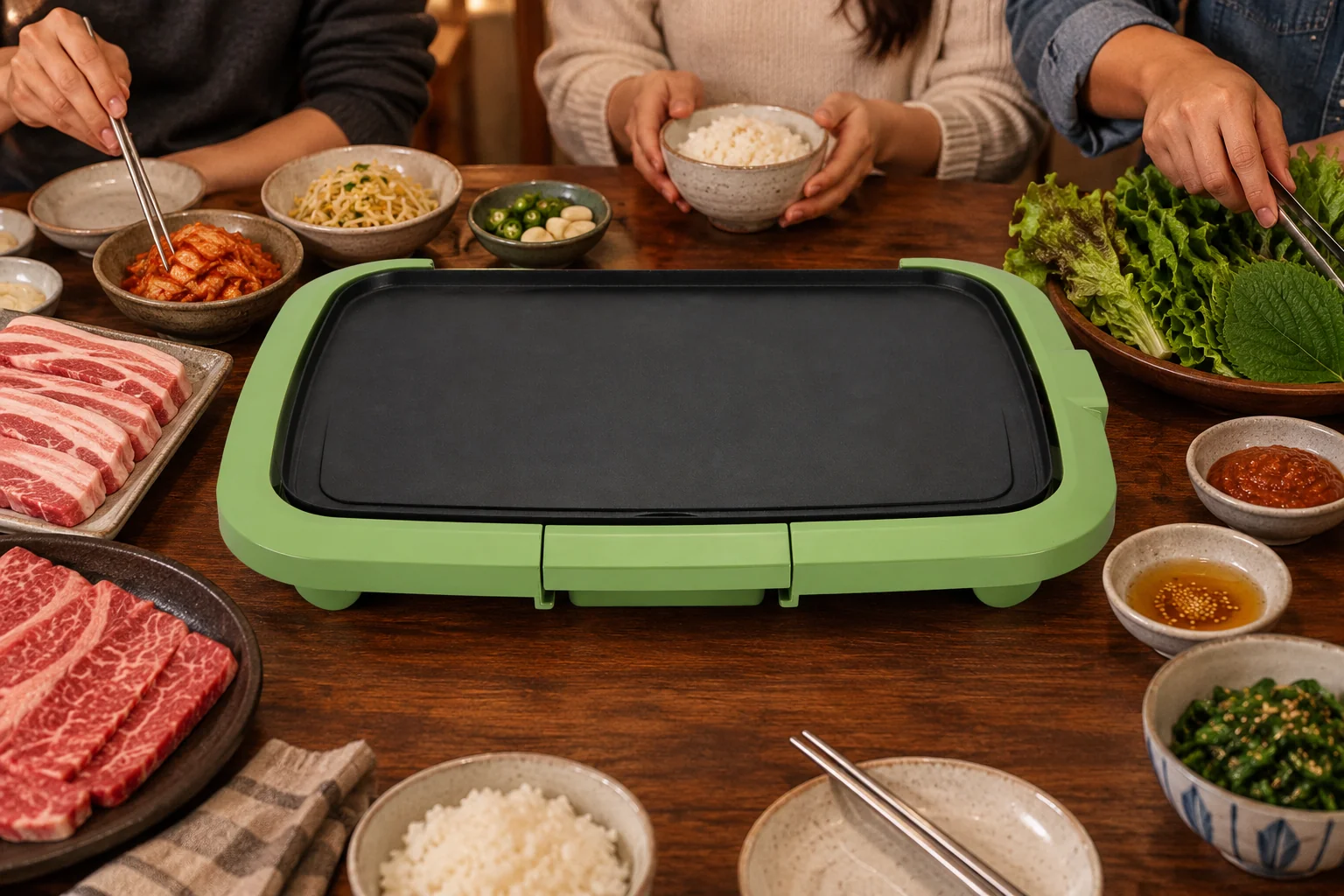
6. The green Hebang JP-001 at a shared table
Looking back over the meal, the needs of a tabletop grill are quite practical: room to lay the meat flat, space to turn and serve it, and a table arrangement that keeps plates and side dishes easy to reach. Our green Hebang JP-001 electric grill has a rectangular, flat black cooking surface with a green frame and rounded corners. These details offer a useful starting point when considering how it fits into a shared meal.
- One continuous flat cooking surface: lay out meat and vegetables for each round, leaving room to turn and serve them, in keeping with the small-batch grilling approach above.
- A rectangular body: when arranging the table, consider the appliance’s footprint, working space around it and where guests will reach for food, then position the greens, side dishes and individual plates.
- A green frame and black cooking surface: the distinct colour combination gives brands and retail buyers an exterior to assess against their target kitchen styles and existing product ranges.
For kitchen appliance brands and channel buyers, these everyday table details also become questions to answer when evaluating a sample. Does the cooking surface suit the intended menu? Is the appliance convenient to use in the planned table arrangement? Do its electrical configuration and cleaning requirements meet the needs of the target market? Share your intended use with us, and we can review the green JP-001’s specifications and samples together.
Explore our electric grill range. To discuss electrical configurations, samples, packaging or OEM/ODM options for the green JP-001, send your target market and product requirements to our Hebang team.